
Our company was established in 2012 and is a national high-tech enterprise. We mainly take charge of R&D, production, sales, and service of LED drivers. We have over 1000 clients worldwide and over 3 million output every year. Our products have been sold worldwide, such as in Thailand and USA.
Custom Service
We can customize the lamp structure, required functions, parameters, etc. Also, we provide OEM&ODM services and a one-stop solution including a full design, manufacturing, and after-sales.
Complete Certification
The company has passed the "ISO9001:2015" quality management system certification as well as the certificate of national high-tech enterprise. The products are compatible with multi-national certifications, including China CQC certification and international UL, CUL, TUV, ROHS, CE, CB, SAA, FCC, CCC, etc.
Strong Production Ability
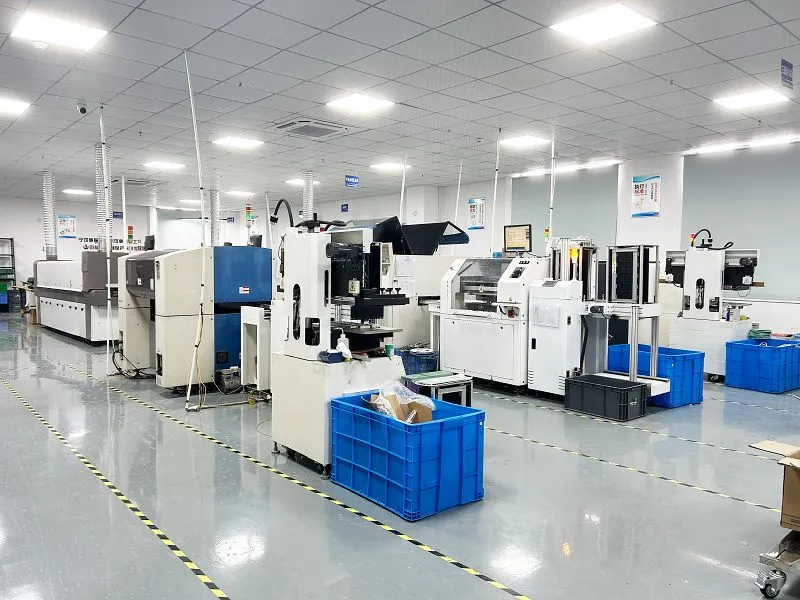
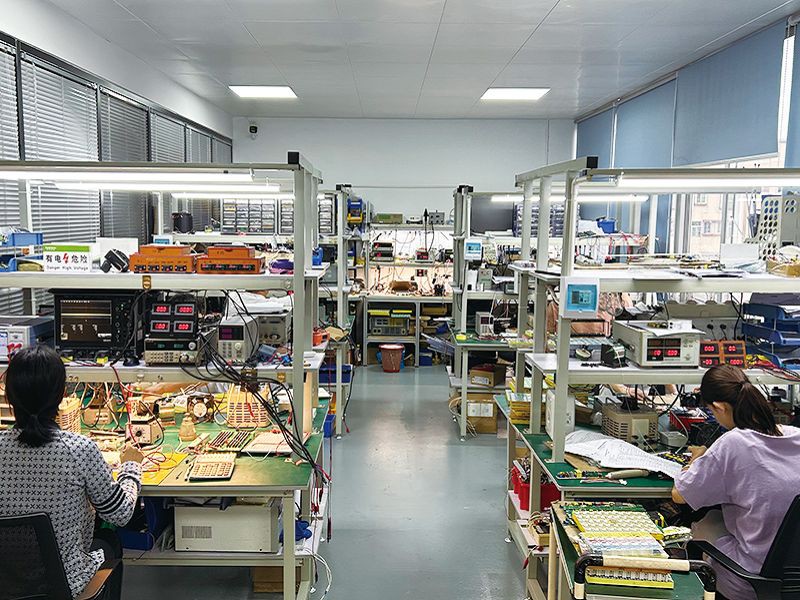
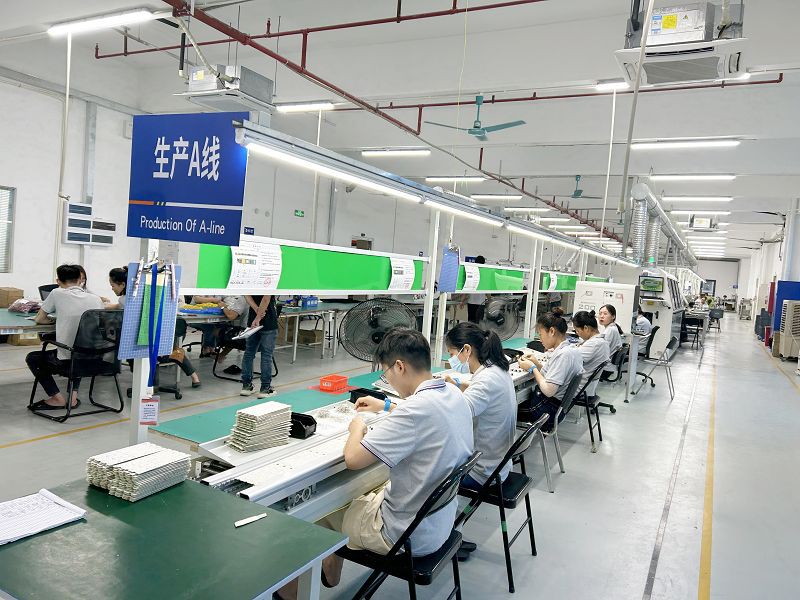
With a 4000 square meters factory in Foshan high-tech Zone, the company has 3 patch production lines and 3 plug-in production lines. There are around 100 employees and the annual capacity reaches 5 million shipments. Not only does the company have a professional R&D team of about 20 people, but also has advanced equipment to support such as SMT machines, automatic gluing machines, aged vehicles, reflow solder, and so on.
Professional Team
Most of the R&D team has 10 years of experience in the LED lighting industry. The team covers professionals from multiple fields including electronic engineering, optical design, and lighting engineering, providing comprehensive technical support to customers.
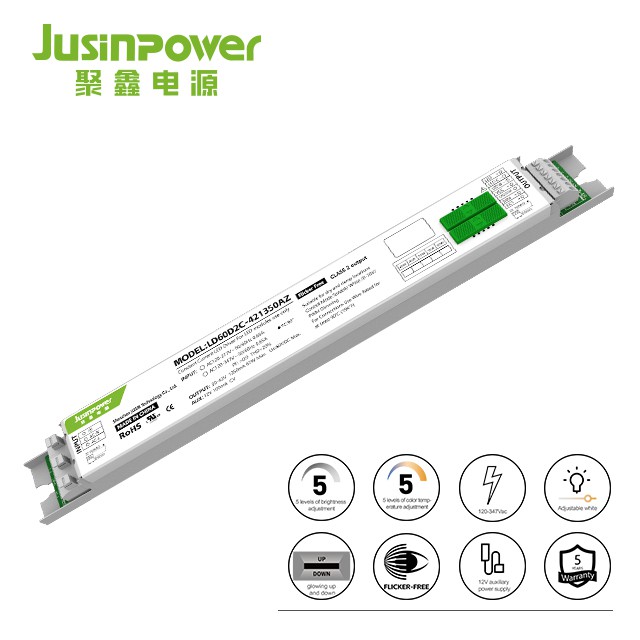
Its dual sets of 0-10V dimming channels offer precise control over LED lighting systems, enabling users to adjust the brightness and color temperature of LEDs with ease. To ensure the reliability and safety of the product, the 5 CCT LED driver is equipped with protective features. These include over-voltage protection, short-circuit protection, and over-temperature protection .
0-10V Tunable White LED Driver
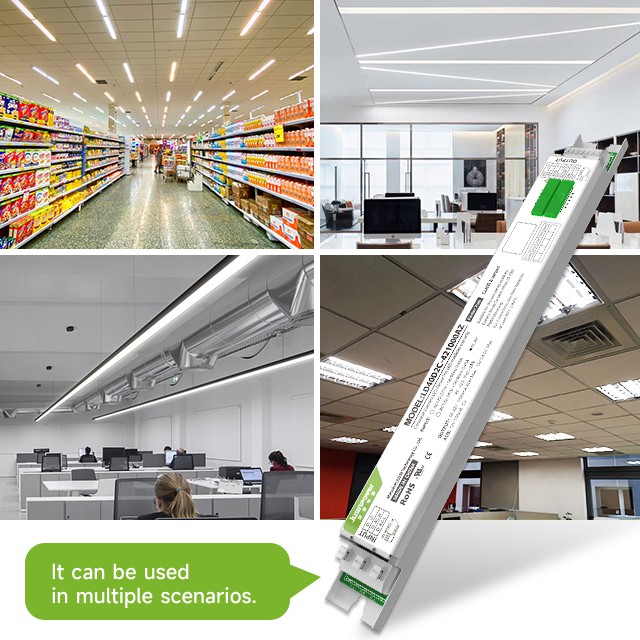
The product allows for precise control over the color temperature of the emitted light. Its extended metal shell not only enhances the aesthetic appeal of the product but also serves a crucial function in heat dissipation. Ideal for use in panel lights, uplights, downlights, linear lights, floor lights, and more, this driver can be seamlessly integrated into various lighting systems.
The product has dual channels and offer 5 levels of brightness and colors temperature to control, which is suitable for various occasions. Also, this product has 3 CCT adjustable lights including 3000K (warm white), 4500K (neutral white), and 5000K (daylight white).
Casambi is an advancing lighting-control solution based on Bluetooth Low Energy (BLE), using robust, high performance mesh networking technology. This driver can be controlled by blue-tooth without WiFi or wireless technology. With multi-functional constant current, it can offer smooth and ambient light.
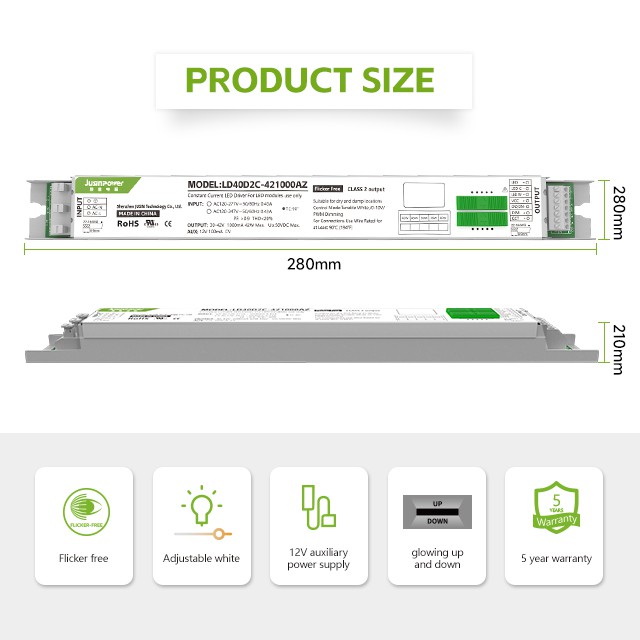
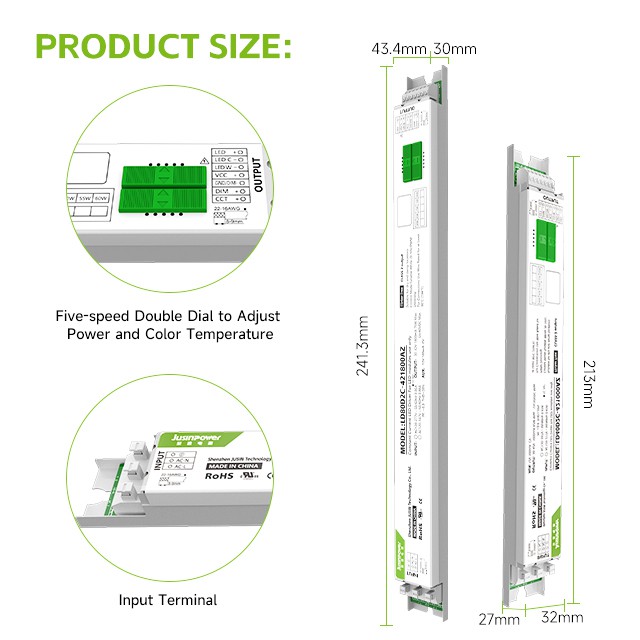
The product is widely used for museum, exhibition, and factory. It is programmable and flicker-free, providing smooth experience of light control. In addition, there are double dial switches to control power and color temperature for this driver.
This driver is an isolated constant current LED driver. With 5 years warranty and 1% deep dimming, users can adjust colors and brightness by the DIP switch or an external dimmer.
Deep Dimming Tunable White LED Driver
This driver has passed FCC, CUL certifications and has dual output channels. The isolated constant current power supplies ensure safe and stable operation, even in potentially hazardous environments. The dual 0-10V dimming channels provide flexibility and convenience, allowing users to independently control multiple LED lights from a single power supply.
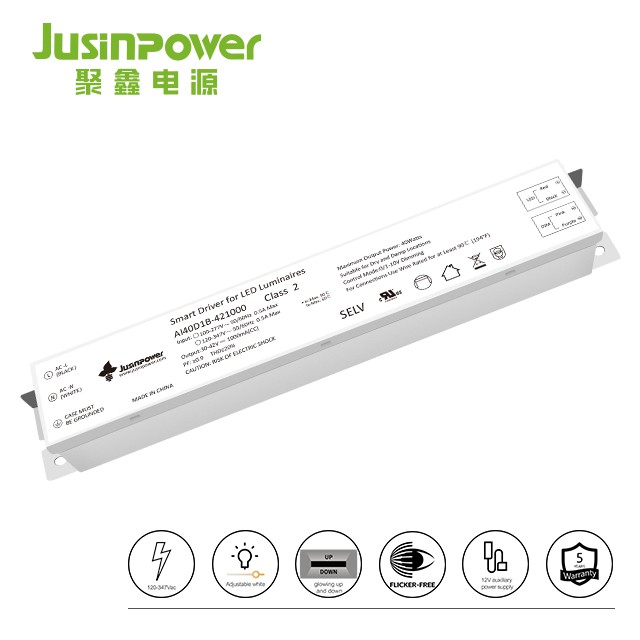
With the maximum power of 40W, it has ability to accept a 0-10V positive adjustment brightness signal, enabling precise control over the intensity of the LED light output. And it can accommodate a wide range of input voltages, from 100-277Vac to 120-347Vac. This ensures seamless operation across different power grids and geographies.
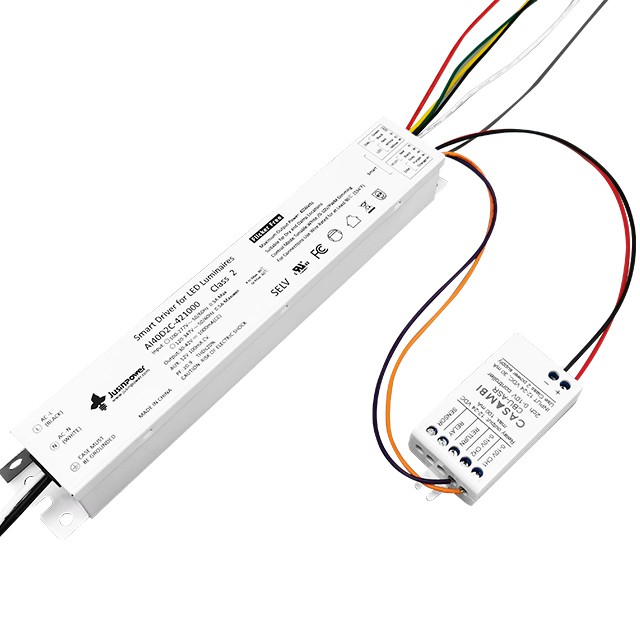
It is isolated and constant current to ensures safe and efficient operation of LEDs. The built-in 12V 100mA (max) constant voltage auxiliary power supply offers additional flexibility, making it easy to power auxiliary electronics such as sensors or controllers. The dual channel output design of the driver allows for flexible control of both the main LED channel and the auxiliary channel.
A linear LED driver is an electrical device used to regulate and control the current in an LED light source. It supplies a constant voltage, regardless of how much current is drawn from it, which allows for stable and consistent performance. Linear drivers are ideal for applications where precise lighting control is required, such as when dimming or color-mixing lighting fixtures. They provide smooth transitions between light levels and can help reduce power consumption.
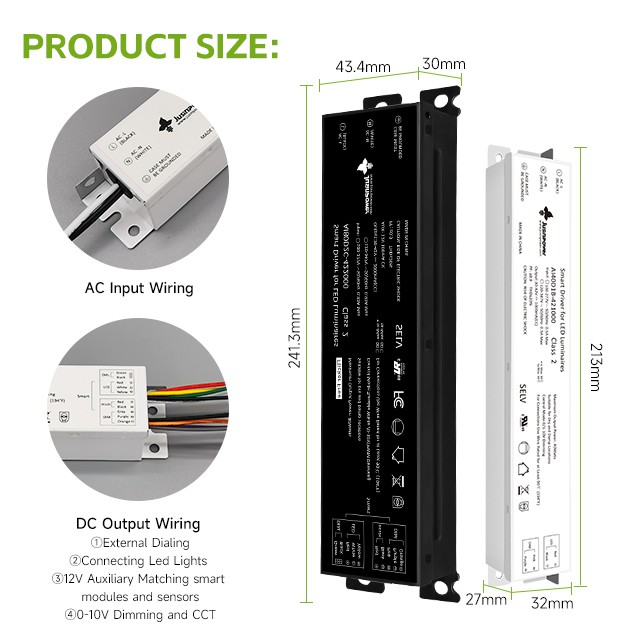
Common Types of Linear LED Driver
Internal LED Drivers
Internal LED drivers are built into or onto the lamp itself. Think of your low-power indoor lighting such as LED bulbs, they will typically have a driver built into them. Doing this makes their cost lower and also creates a better-looking product as it is all self-contained and hidden within the internals.
External LED Drivers
External LED drivers are those that are fitted outside the light source. These are typically going to be used with higher power applications along the lines of sports lighting, street lights, and such. However, they are also used with LED tape, which whilst it may not be of a higher power, by the nature of it there is nowhere to internally mount the driver. The main advantage of an external driver is it can then be remote, so at the bottom of a pole meaning it's much easier to access for maintenance and replacement should anything go wrong, or with the likes of the LED tape and driver combo the driver can be replaced with the tape still in place should it fail.
Troubleshooting of Linear LED Drivers
One of the most common problems encountered with LED drivers is flickering or inconsistent dimming levels. This can be caused by various factors, including incompatible dimmer switches or poorly designed LED drivers.
●Verify compatibility: Ensure that the dimmer switch being used is compatible with LED lighting. LED drivers often require specific dimmers that are designed for low-voltage lighting.
●Check load requirements: LED drivers have specific load requirements, and using a dimmer with a load below the minimum threshold can cause flickering or erratic dimming. Make sure the total wattage of the LEDs connected to the driver meets the minimum load requirements.
●Upgrade the driver: If the above steps do not resolve the dimming issues, consider upgrading to a higher-quality LED driver or one specifically designed for dimming applications.
Overheating can lead to premature failure of both the LED driver and the LEDs themselves. Excessive heat can damage the internal components, resulting in decreased performance or complete failure.
- Adequate ventilation: Ensure that the LED driver is properly ventilated. Poor ventilation can cause heat buildup, especially in enclosed fixtures. Consider installing heat sinks or fans if necessary.
- Operating temperature range: LED drivers have specified temperature ranges within which they can safely operate. Ensure that the ambient temperature does not exceed the maximum temperature specified by the manufacturer.
- Reducing load: If the LEDs connected to the driver exceed their maximum load- capacity, it can lead to overheating. Check the load requirements and consider reducing the number of LEDs connected or using a driver with a higher load capacity.
LED drivers should provide a stable and consistent voltage output. However, voltage fluctuations can lead to inconsistent brightness levels or flickering.
●Voltage measurement: Use a multimeter to measure the voltage output of the LED driver while the LEDs are powered. If the reading fluctuates significantly, it indicates a potential issue with the driver.
●Input power stability: Unstable or fluctuating input power can affect the performance of the LED driver. Ensure that the power source is stable and free from voltage spikes or surges. Consider using surge protectors or voltage regulators if necessary.
●Check wiring connections: Loose or faulty wiring connections can also cause voltage fluctuations. Inspect the connections between the driver, LEDs, and the power source, and recheck them to ensure they are secure.
LED drivers are specifically designed to operate within certain voltage and current ranges. Incompatible LEDs, i.e., those that does not match the driver's specifications, can lead to performance issues or even failure.
- Check specifications: Verify that the LEDs being used are within the voltage and current range specified by the LED driver. Using LEDs with higher or lower ratings can lead to unstable operation.
- Retrofitting considerations: When retrofitting older fixtures with LED lights, compatibility becomes a critical factor. Ensure that the LED driver is matched to the retrofit lamps or tubes being used.
- Consult manufacturer documentation: If the compatibility issue persists, consult the manufacturer's documentation for guidance on compatible LEDs. They may offer specific recommendations or compatibility lists for their LED drivers.
Know the Type and Number of LED Lights in the Setup
Identifying the type and number of LED lights you need in your installation, as well as how you will arrange them. You need a constant-current LED driver if your lights are wired in series, like ground and decking lights. You need a constant-voltage LED driver if they'll be wired in parallel, like with LED tape or commercial LED strip lights.
Check the Milliamp Rating of Your LEDs
Ensure that the LED lights' milliamp rating is the same as the LED driver's. Amps and milliamps are the units of measurement for electrical current. While LED lights come in a variety of milliamp ratings, the most popular options are 350mA and 700mA.
Efficiency
When it comes to powering LED lights, efficiency is vital. The efficiency of a power supply tells you how much of the power being used is going towards lighting the LED. The higher the efficiency percentage, the more energy you save. For optimal performance, choosing a power supply with an efficiency rating of 80% or higher is a good idea.
Power Factor
When choosing an LED power supply, it's important to consider its power factor. The power factor measures how much of the real power load the driver places on the electrical network. The range for the power factor is from -1 to 1. A power factor closer to 1 means the driver is more efficient. A standard for the power factor is 0.9 or higher. If a driver's specification does not mention a power factor, it usually means that the device has a power factor below 0.9, which is less efficient.
Small or Large LED Power Supplies
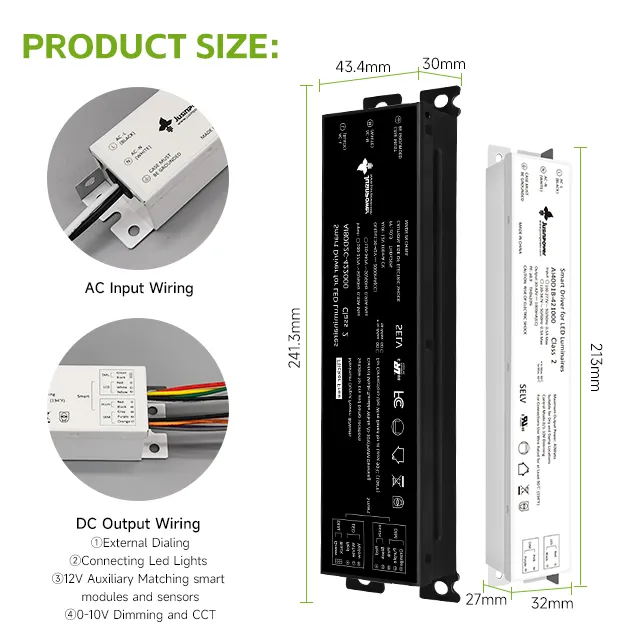
Consider where you will install it. If you plan to place it inside the product you're creating, make sure it's small enough to fit in the designated space. If you're installing it outside the product, you'll need a way to mount it nearby. Many different power supplies are available in various sizes and shapes to fit your specific needs.
Class I or Class II LED Power Supply
Class I LED drivers have basic insulation and must be connected to a protective ground to reduce the risk of electric shock. This is achieved by using basic insulation and connecting conductive parts to the earth in case the basic insulation fails, preventing the generation of dangerous voltage. On the other hand, Class II LED drivers provide additional safety measures, such as double or reinforced insulation, in addition to basic insulation to prevent electric shock. They do not rely on protective ground or installation conditions for their safety.
UL/CE or Other Certificates
It's important to choose an LED power supply that is UL/CE certified. These certifications ensure better safety compared to those that are not certified. These certifications are often required for new and remodeling projects. Other certificate requirements from different countries for LED power supply, such as PSE, SAA, etc.
Safety Protection
It's important to look for power supplies with protection features like over-current, over-temperature, short-circuit, and open-circuit protection. These features help to prevent problems by shutting down the power supply in the event of a fault. While they aren't required by law, they are essential for safe power-supply use. To ensure that you're using your power supply safely, installing power supplies with these protection features is best.
How to Install LED Driver
Turn off the Power
Before beginning the installation process, ensure that the power to the lighting system is turned off to avoid electrical shock.
Connect the Wires
Connect the wires from the LED driver to the lighting system's wires, making sure that the polarity is correct. The positive wire should be connected to the positive terminal, and the negative wire should be connected to the negative terminal.
Mount the Driver
Secure the LED driver in the desired location using screws or other mounting hardware.
Turn on the Power
After completing the installation, turn on the power to the lighting system and test the LED driver to ensure it is functioning correctly.
Verify Compatibility
Verify that the LED driver is compatible with the LED lighting system by checking the voltage and current requirements of both components.
Seek Professional Help
If you are unsure about any aspect of the installation process, or if you encounter any issues during the installation, seek professional help from a qualified electrician or technician.
Certifications
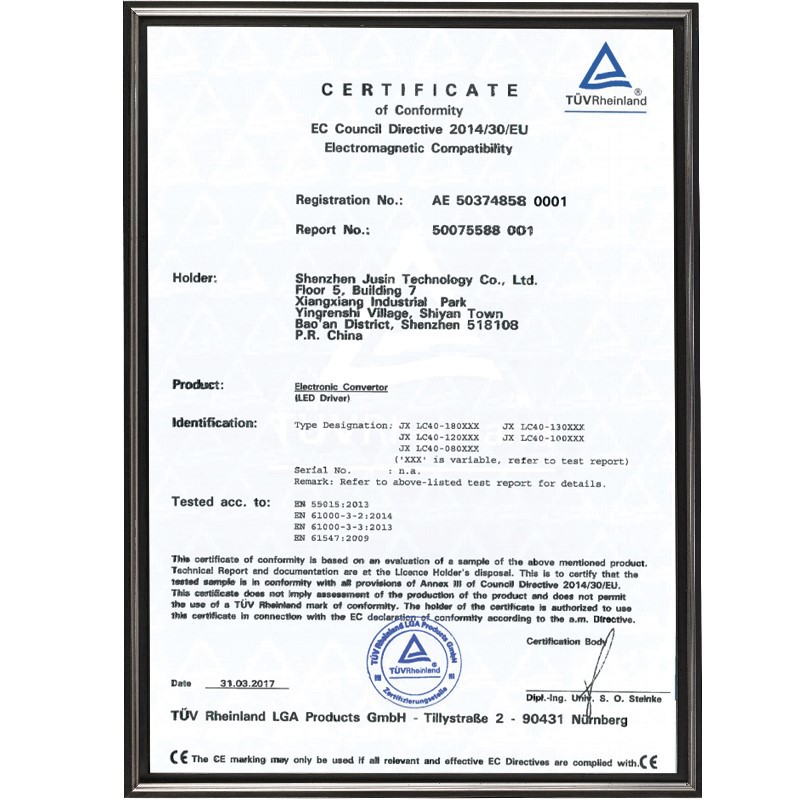
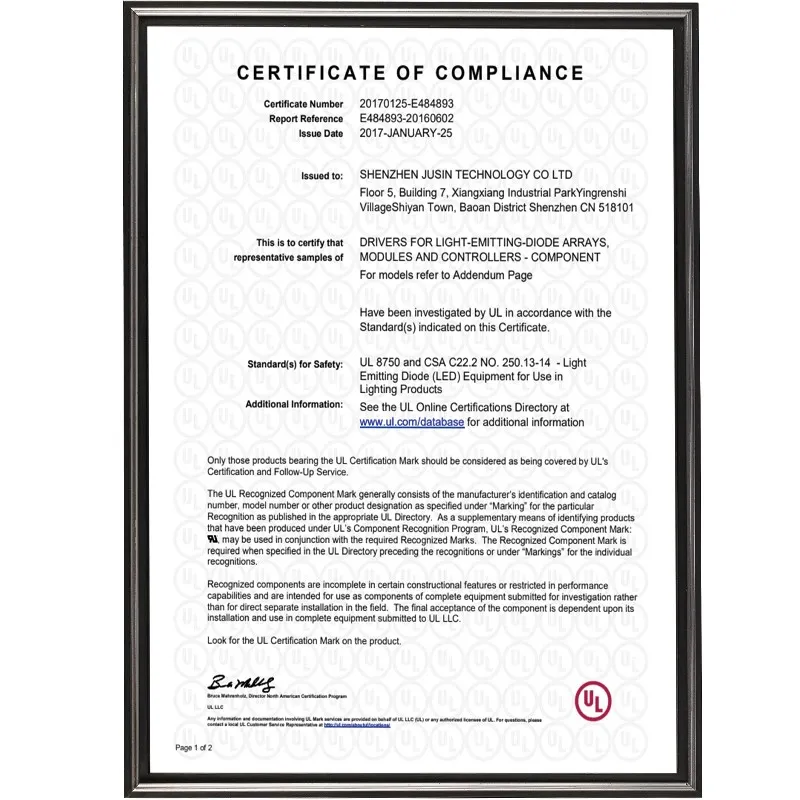
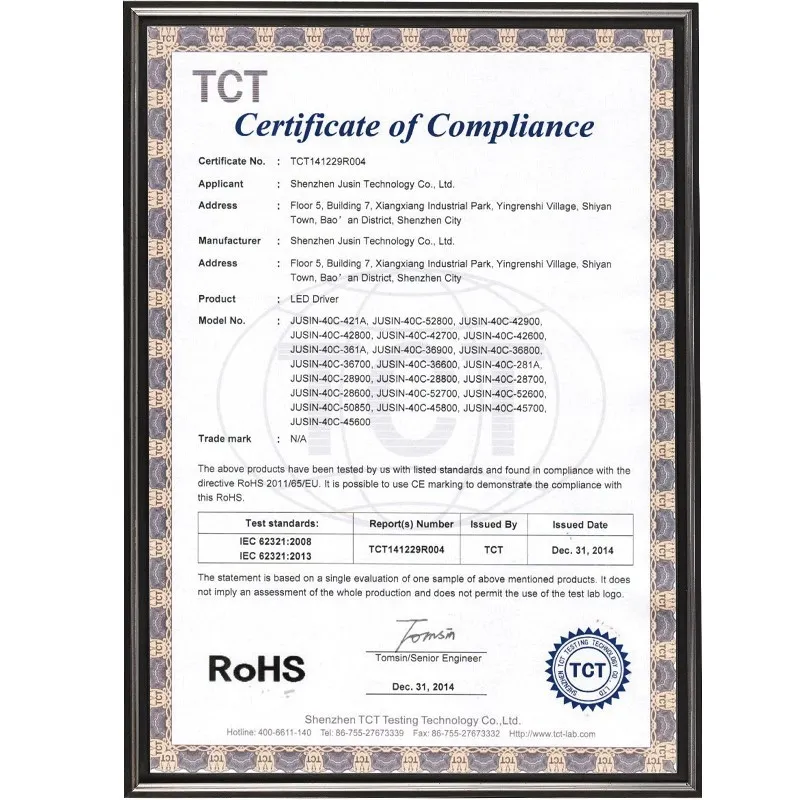
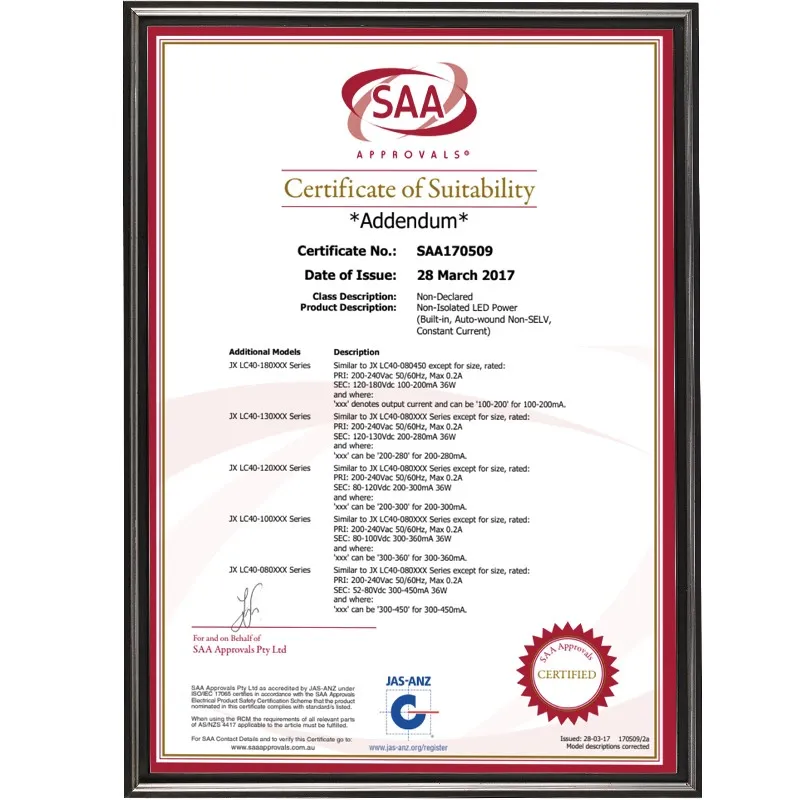
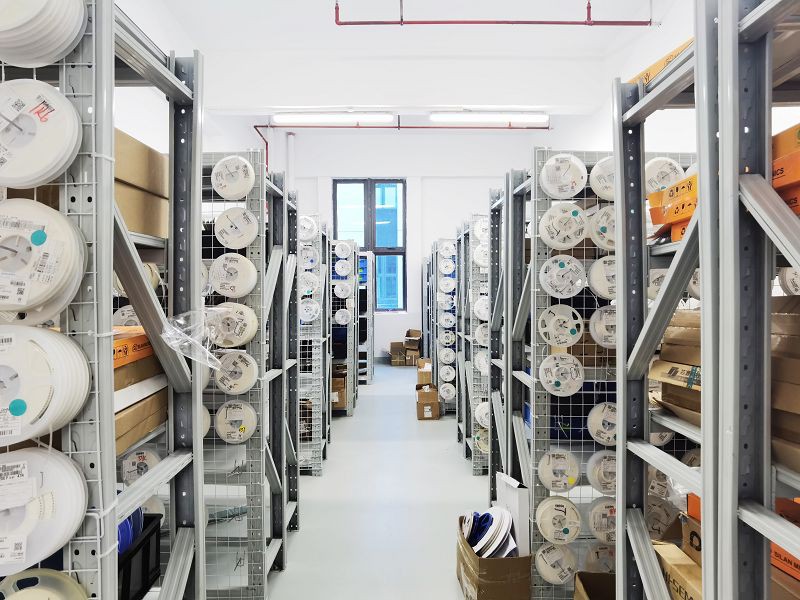
We are a LED drive manufacturer headquartered in Shenzhen city, China. We have set up a branch in Taiwan, and possess a 4000 square meters factory.
FAQ
Hot Tags: smart tunable white driver, China smart tunable white driver manufacturers, suppliers, factory, suitable for narrow spaces, pwm dimming ac, 0-10V dimmer, bipolar current driver, slim led strip driver, sensor dim led driver
LD series
LD40D2C-421000AZ
|
Performance |
||
|
Model |
LD40D2C-421000AZ |
|
|
Input |
Efficiency |
87%@220Vac full load |
|
Voltage |
120-277Vac(standard) |
|
|
120-347Vac(optional) |
||
|
Frequency Range(Hz) |
50/60Hz |
|
|
Power Factor |
≥ 0.9@347Vac full load |
|
|
THD(full load) |
<10%@120Vac full load |
|
|
AC Current(max) |
0.65A@120Vac full load |
|
|
Standby Power |
<1W |
|
|
Inrush Current (cold engine start)Max |
20A@120Vac |
|
|
28A@277Vac |
||
|
30A@347Vac |
||
|
Leakage Current (max) |
55W |
|
|
Output |
Current(mA)/Voltage (VDC) Power(W) |
30-42Vdc/1000mA/42W |
|
Current Ripple |
<10% |
|
|
Channel |
Dual output |
|
|
Linear Regulation |
±5% |
|
|
No-load Output Voltage |
<60V |
|
|
Start Time |
<0.5S@347V <1S@120V |
|
|
Auxiliary Voltage |
12V/100mA |
|
|
Function |
Dimming Method |
0-10V 0.5V OFF /0.7V OPEN |
|
Dimming Current |
<1mA@10V <2mA@0.7V |
|
|
Dimming Range |
1%-100% (standard) |
|
|
10%-100%(optional) |
||
|
Power |
5 adjustable |
|
|
Color Temperature |
5 adjustable (optional) |
|
|
stepless dimming (standard) |
||
|
Protection |
Over Temperature |
When temperature is too high,shut down the output, Recovers automatically |
|
Over Load |
Hiccup, when the output power exceeds ,then,recovers automatically after fault removed |
|
|
Short Circuit |
Close output,recovers automatically after fault removed |
|
|
Physical |
|
|
Length |
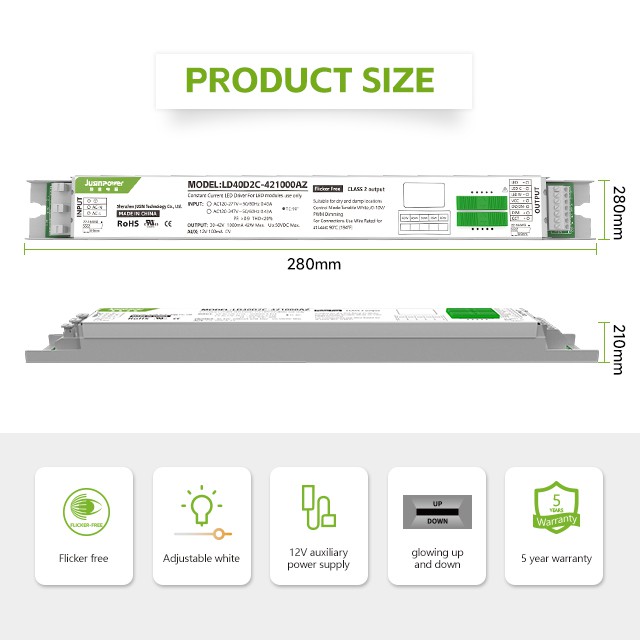
280 mm |
|
Width |
28 mm |
|
Height |
21 mm |
|
Mounting Length |
261mm |
|
Weight (g) |
238g |
|
Environmental |
|
|
Safety Standard |
Ul8750 ,Class2 |
|
EMC Emission |
Meets Fcc Part 15 |
|
Operating Temperature |
-20°C To 50°C |
|
Storage Temperature,Humidity |
-20°C To 85°C,20-90%Rh |
|
Case Temperature |
Tc=90℃ |
|
Warranty Tc |
85°C Max For 50k Hr Life |
|
Surge Protection |
L-N 1Kv , L/N-Fg 2Kv |
|
IP Rating |
IP20 |
|
Material |
Iron Shell |
|
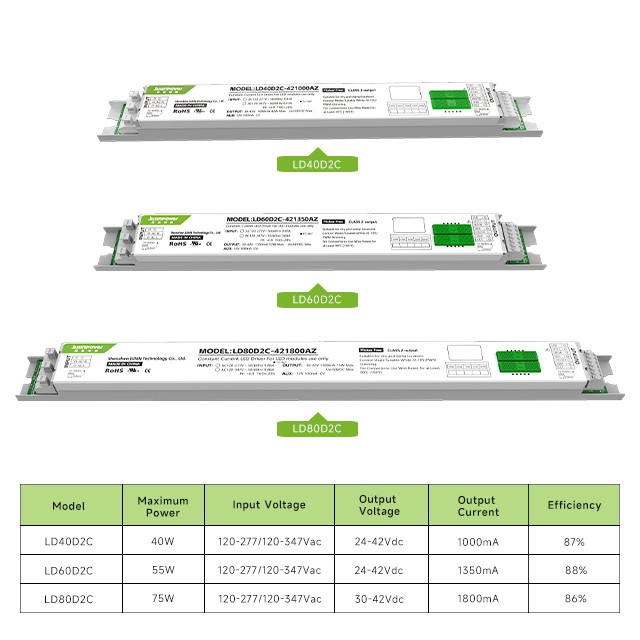
Series Driver |
||||||||
|
Model |
Max Power |
Input Voltage |
Output Voltage |
Output Current |
Power Factor |
Power Regulation |
Color temperature |
Efficiency |
|
LD40D2C-42XXXXYZ |
40W |
120-277/120-347Vac |
24-42Vdc |
1000mA |
0.9 |
Adjustable |
Adjustable |
87% |
|
LD60D2C-42XXXXYZ |
55W |
120-277/120-347Vac |
24-42Vdc |
1350mA |
0.9 |
Adjustable |
Adjustable |
88% |
|
LD80D2C-42XXXXYZ |
75W |
120-277/120-347Vac |
30-42Vdc |
1800mA |
0.9 |
Adjustable |
Adjustable |
86% |