

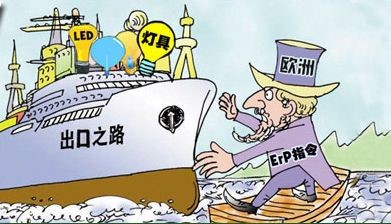
With the development of LED technology and mankind's emphasis on environmental issues, countries must have increasingly strict energy efficiency requirements for imported LED products, and they must keep up with the trend and constantly update them. Mandatory requirements for energy efficiency are a trend, which is conducive to energy conservation and emission reduction. However, the ErP directive, as a technical barrier to trade, will inevitably have a certain impact on my country's lighting product exports. This signal is that the EU may follow the old path of anti-dumping investigation and filing of Chinese energy-saving lamps. Thinking of the huge blow to China's photovoltaic industry caused by the turbulent photovoltaic anti-dumping case since July last year, this new regulation is very targeted to China's LED lighting industry.
Indeed, the technical barriers brought about by the implementation of the new directive are undoubtedly another heavy blow to exports following the appreciation of the RMB, reduction of export tax rebates, rising raw material prices, anti-dumping and many other export pressures. While the new directive requires companies to improve product quality and technical level, it also has very strict requirements on the conformity assessment and market supervision inspection procedures of LED lighting products, which will undoubtedly increase the export costs of companies.
The increase in export costs for LED companies is mainly reflected in material and certification costs. In the past, it was enough to use ordinary LEDs and drivers, but now it is necessary to use more energy-efficient components, which increases the cost to a certain extent. Even some weaker companies did not strictly follow international standards for product design and certification in order to reduce costs. Now the implementation of the new directive will definitely cause these companies to make decisions in design solutions, material selection, and packaging methods. Corresponding adjustments can be made to meet the requirements for entering the European market.
In addition to the increase in material costs, there are also testing and certification costs that need to be borne by the enterprise. As a simple example, from the article (EU) No 1194/2012 which proposes to detect the survival rate of light bulbs after 6000 hours, suppose we test a 5W lamp and take 20 samples as samples. The electricity bill is based on industrial electricity consumption of 1 Calculated in RMB/kWh, the electricity bill alone for a 6,000-hour test has increased by more than RMB 600. In the second phase of the implementation of the new directive, that is, after September 1, 2014, only LED lamps with an energy efficiency index of 0.2 or above can enter the EU market, which is equivalent to 2.2 times the current national standard requirements in my country, according to an article on the official website of the General Administration of Quality Supervision, Inspection and Quarantine. , the new EU directive will make the certification and spot inspection fees for each specification product reach 10,000 yuan, directly leading to an increase in the production cost of LED lamps by more than 20%.
For companies whose products cannot reach a certain mass production, the cost of certification is too high and there is no profit margin. Therefore, many small and medium-sized enterprises are unwilling to spend large sums of money to obtain international certification. For these companies, the new directive implemented by the EU will undoubtedly be a huge impact. Some new technical contents and the design of parameter indicators proposed by the new directive are based on a survey of existing products and industry development levels in the market, and have certain reference value for my country in formulating its own energy efficiency standards. At the same time, some people in the industry suggest referring to the latest practices of developed countries such as Europe and the United States, calling for the relevant domestic standards and regulations on the LED industry to be introduced as soon as possible, and to actively transform foreign advanced standards into local standards to align with international standards. "