
In an LED sensing module, “light balance” typically refers to how the module adjusts or optimizes its light output to maintain a stable lighting environment. This involves three aspects:
1. Light Intensity Adjustment: This refers to daylight sensing. When ambient light levels are high, the LED light’s brightness is reduced; when ambient light levels are low, the LED light’s brightness is increased.
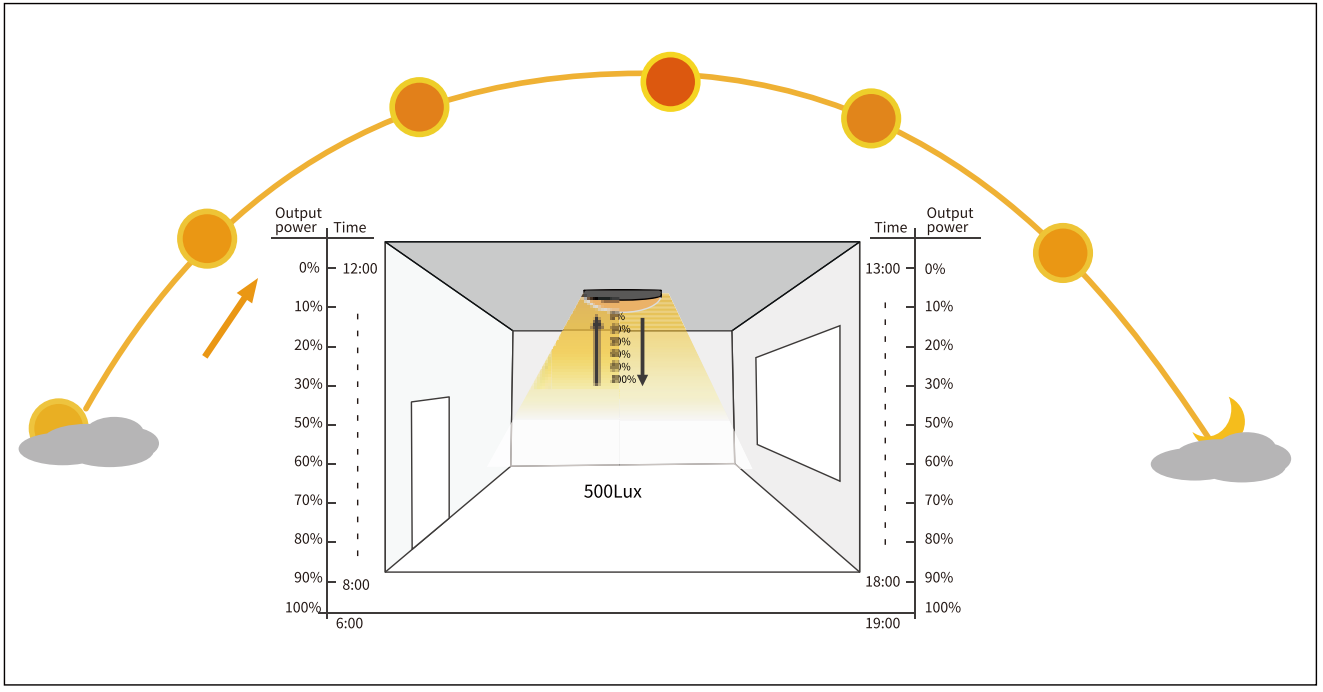
2. Spectral Balance: Adjusting the spectral distribution of the LED light to maintain a balance of different wavelengths, thereby providing a more natural or uniform lighting effect.
- Daytime: Natural light (especially direct sunlight) contains a rich spectrum of components during the day, including wavelengths ranging from red to violet. This spectrum varies at different times of the day (morning, noon, and evening).
- Nighttime: At night, the spectral components of natural light diminish, and the lighting primarily relies on artificial light sources (such as lamps) and residual twilight. The spectrum is reduced and the color temperature is lower.
(1) Sensing Natural Light: The spectral balance sensing module can detect the spectral characteristics of ambient light using built-in sensors. Based on spectral data from different times of day, the module can assess current natural light conditions.
(2) Adjusting LED Spectrum: The sensing module automatically adjusts the output wavelength of the LED light based on the detected natural light spectrum characteristics. For example, during the day, the module may enhance the blue and green components of the LED light to match the color temperature of natural daylight. In contrast, at night, the module might reduce the blue light component and increase warmer tones to simulate the natural nighttime spectrum.
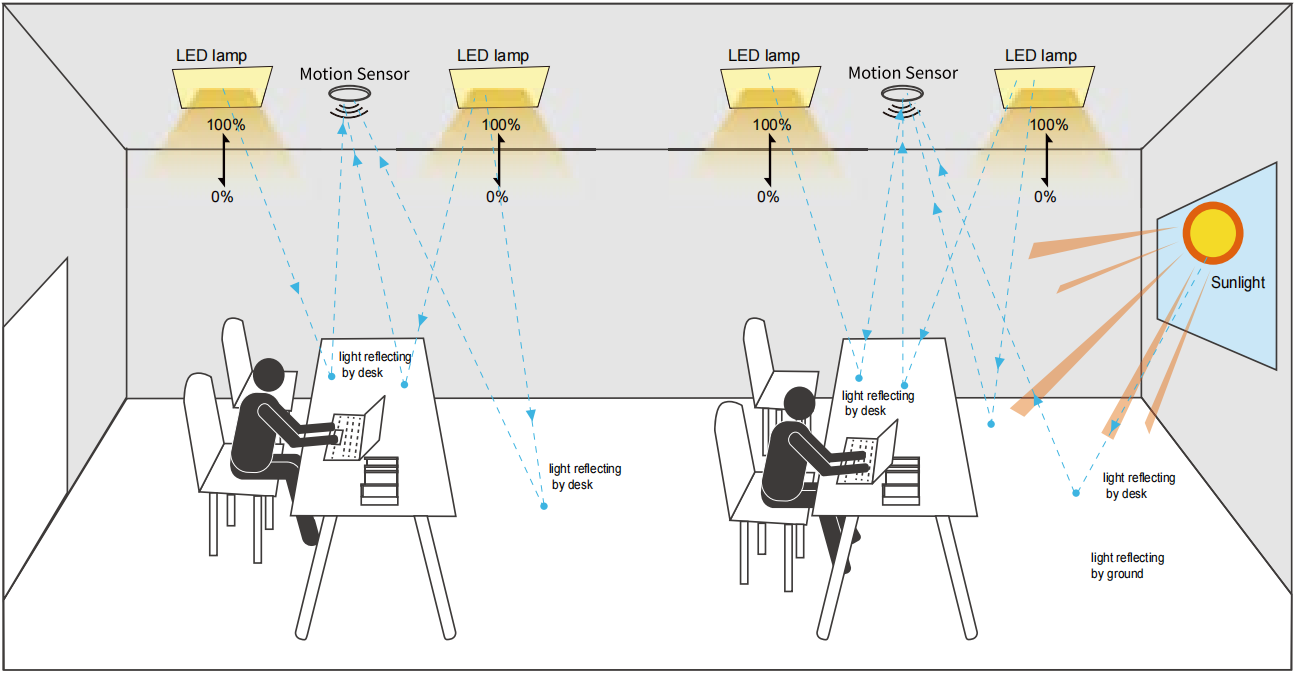
(3) Uniform Lighting: Through such adjustments, LED lighting can better mimic the variations in natural light, making indoor illumination more harmonious with external lighting. This not only improves visual comfort but also helps maintain circadian rhythms, enhancing the comfort of living and working environments.
3. Automatic Calibration: Some LED sensing modules may feature automatic calibration functions to maintain consistent light output. This can include compensating for changes in light output due to temperature variations or aging.
- Brightness Stability: As the LED light is used over time or as environmental conditions change (such as temperature fluctuations), the light output of the LED may vary. The automatic calibration function can adjust the LED output in real time to maintain a consistent brightness.
- Color Temperature Stability: During use, LED lights may experience changes in color temperature due to aging or temperature variations. The automatic calibration function can adjust the color output of the LED to ensure a consistent color temperature.